Reef-scale AI · human judgement

Turn reef imagery into trusted evidence.

COTSpotter connects AI analysis, human validation and integrated reef data to help us see crown-of-thorns starfish sooner and act with greater confidence.

ObserveAnalyse ValidateDecide
Begin the dive
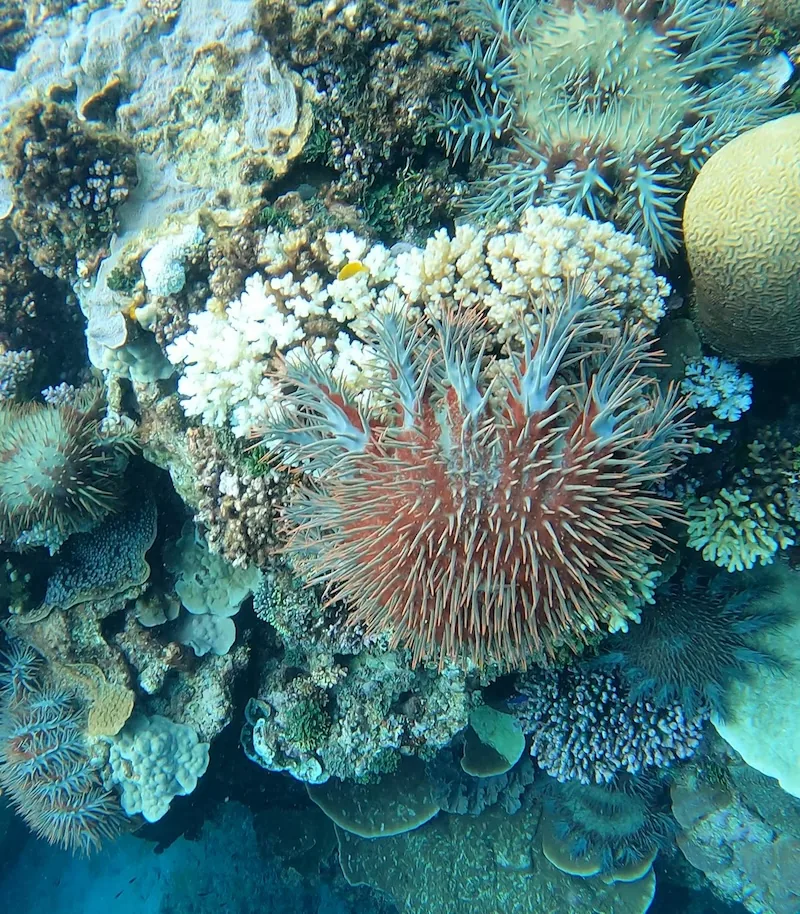
A crown-of-thorns starfish among coral 01 / NATIVE PREDATOR

The challenge

Native to the Reef.
Destructive at outbreak scale.

Crown-of-thorns starfish naturally feed on coral. The management problem begins when their abundance reaches outbreak levels and coral loss outpaces recovery.

Cryptic Often hidden within complex reef structure
Mobile Pressure moves across connected reef systems
Manageable One major reef pressure we can act on directly

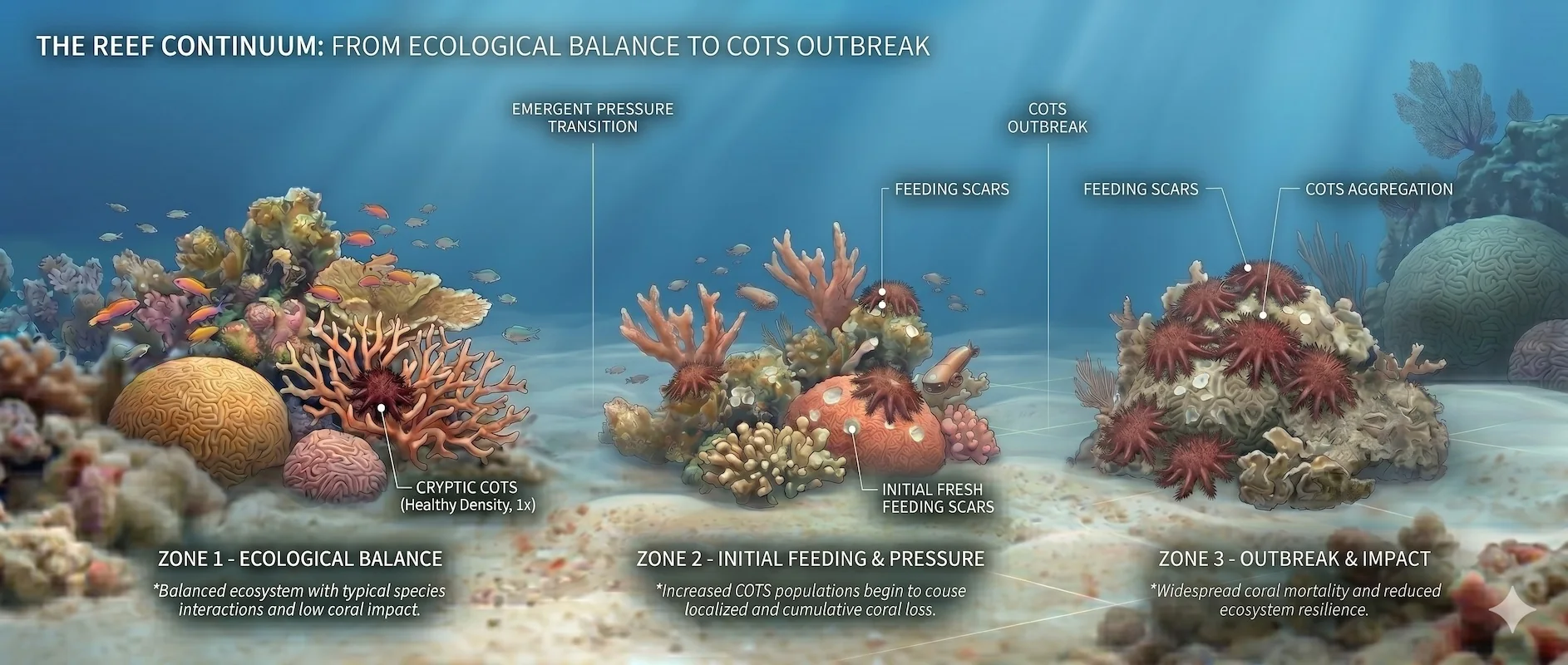
From balance to outbreak

Drag across the reef to explore how feeding pressure builds.

Illustrated reef continuum from ecological balance to crown-of-thorns outbreak

Three complementary views

Each method sees the Reef differently.

COTSpotter does not replace established field methods. It brings their distinct evidence into one traceable decision layer.

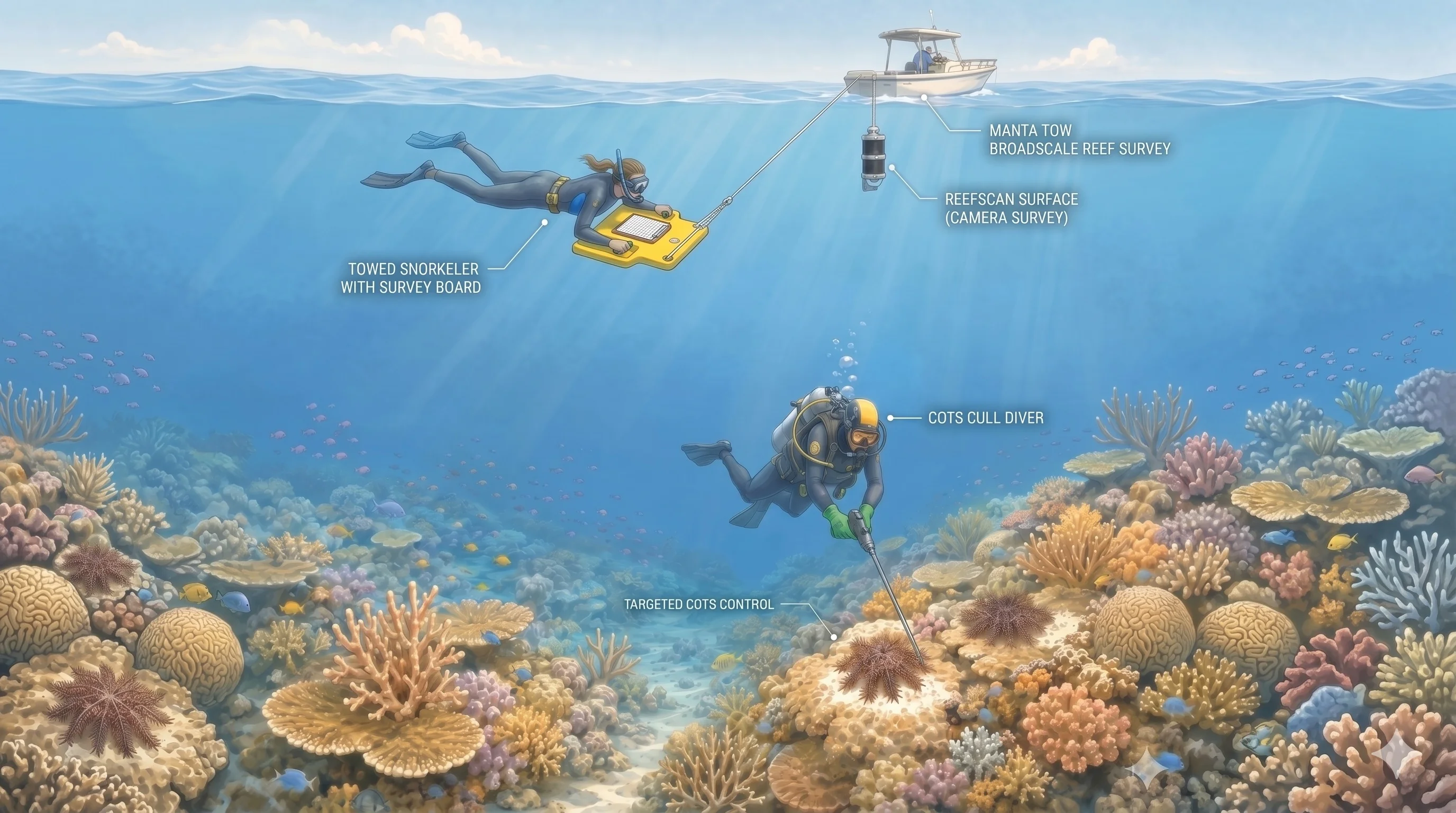
Manta tow, ReefScan image survey and crown-of-thorns culling methods
01 Manta tow Broadscale human observation
02 ReefScan imagery Repeatable, reviewable coverage
03 Cull operations Targeted action and direct evidence

Different purpose. Different resolution. Different effort. One shared reef context.

The COTSpotter workflow

Machines review the volume.
People provide the judgement.

Every result remains connected to its source survey, AI run, review decisions and certification status.

01

Upload & QAC

Field imagery, metadata and provenance checked at trip scale.

RAW EVIDENCE
02

AI detection

AI identifies candidate COTS detections across the imagery.

MACHINE ASSISTED
03

Human validation

People confirm, reject or flag uncertain detections.

REVIEWED
04

Integrated products

Certified evidence returns as maps, reports, data and APIs.

DECISION READY
Human validation

Review the evidence, not every image.

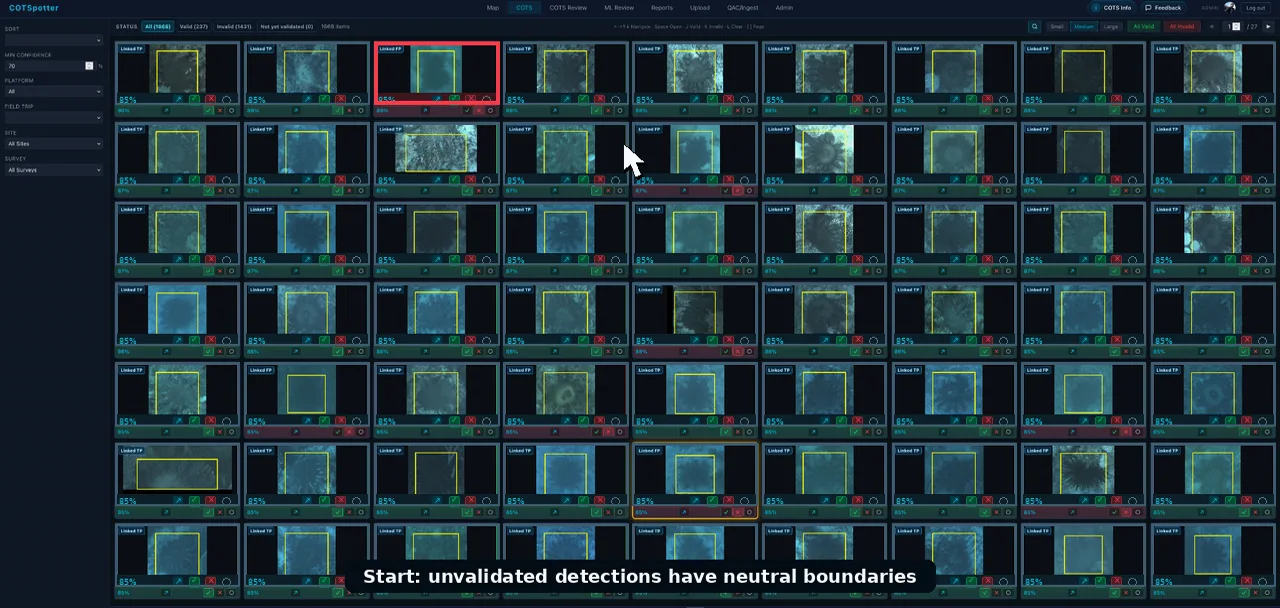
COTSpotter presents candidate detections in a focused review workflow. Validators can quickly confirm a COTS, reject a false detection, or flag an uncertain case for expert review.

Validation workflow

Evidence across scales

Where surveys overlap, the signals align.

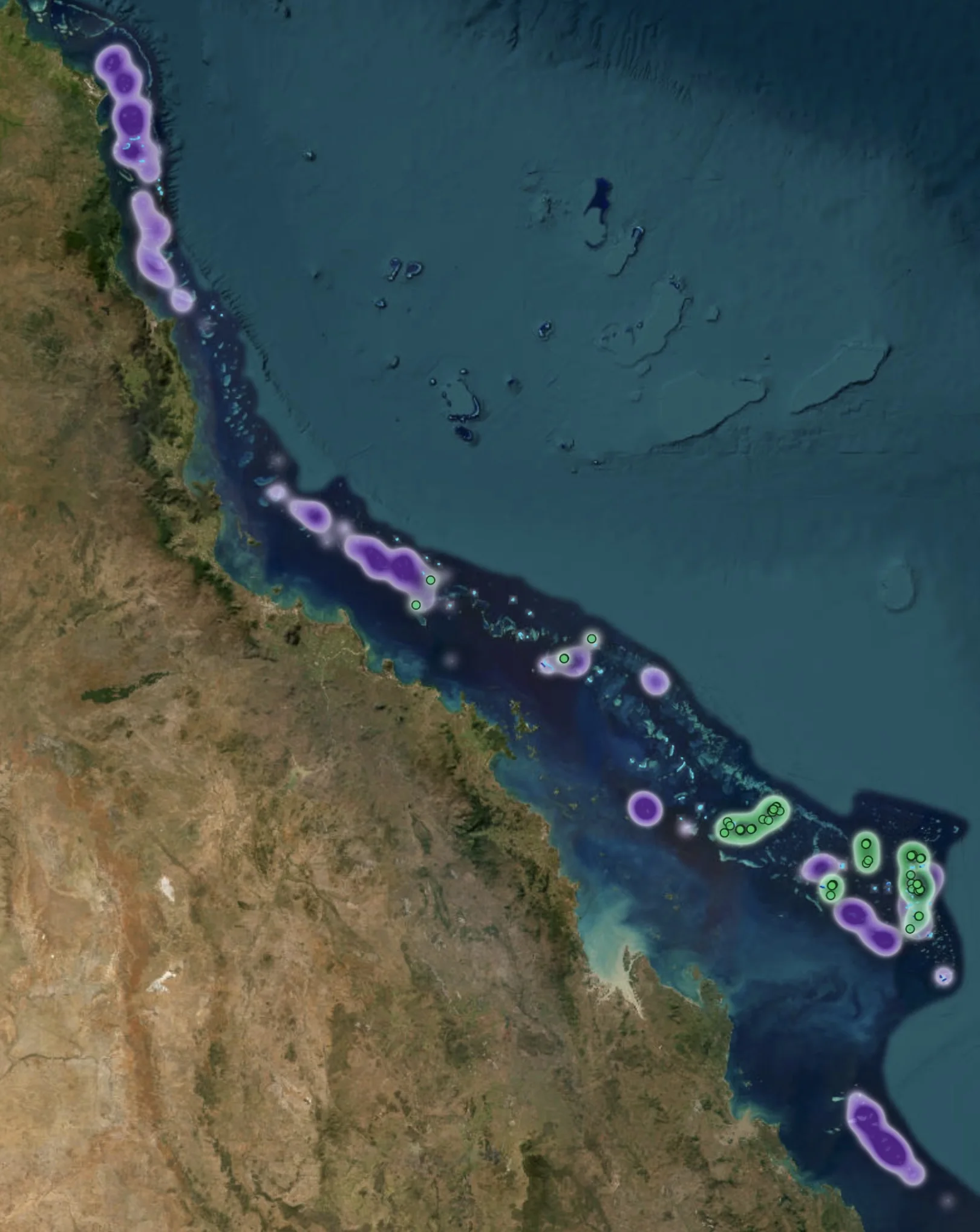
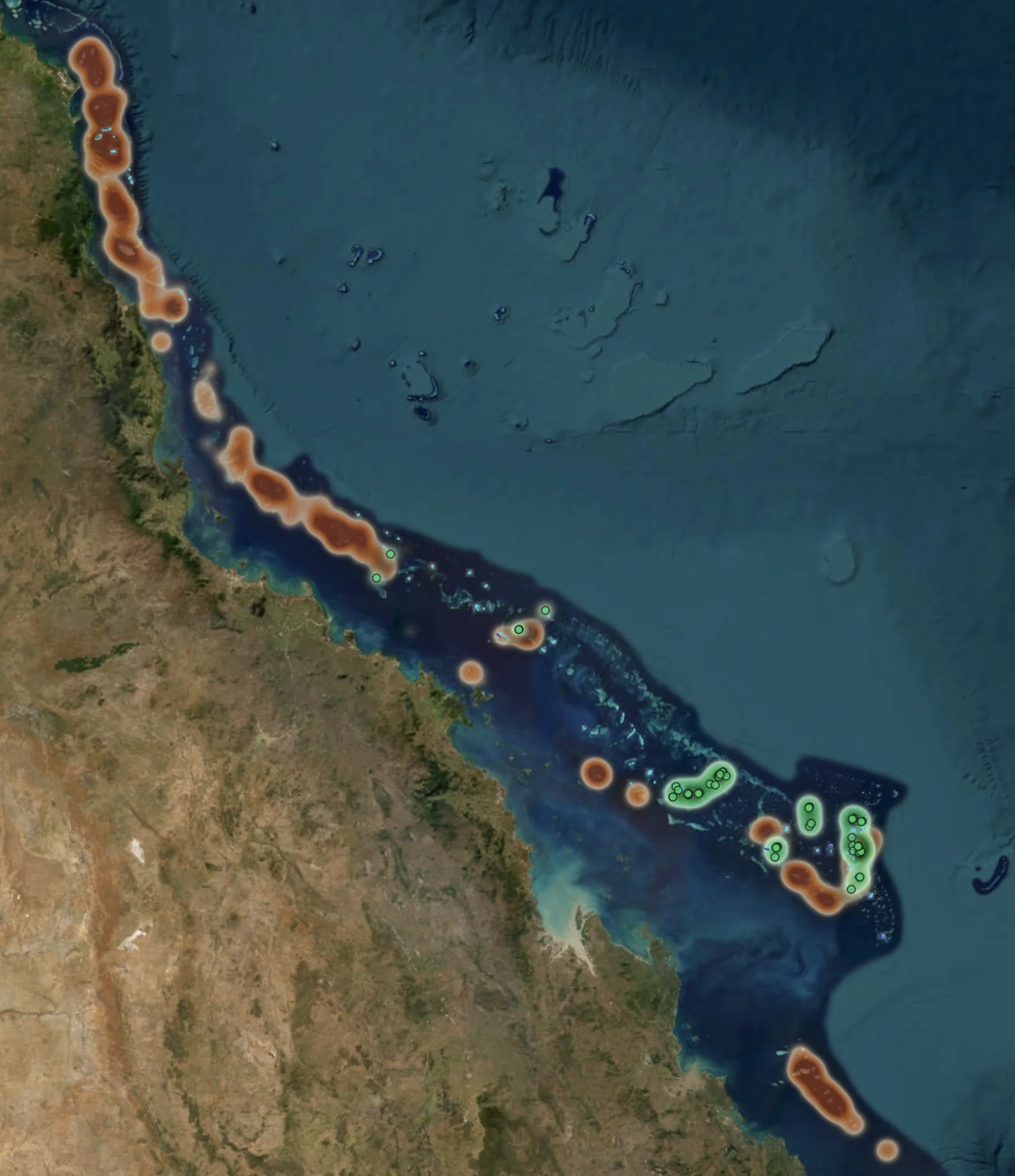
Image-derived detections show promising spatial agreement with established manta tow and cull evidence. The comparison is encouraging—and still needs more matched data.

Image COTS Image survey Manta tow Cull sites

Colour: COTS observed · Gray: zero COTS observed

Image detections compared with manta tow evidence at reef scale
Image detections compared with manta tow evidence
Image detections compared with broad cull evidence
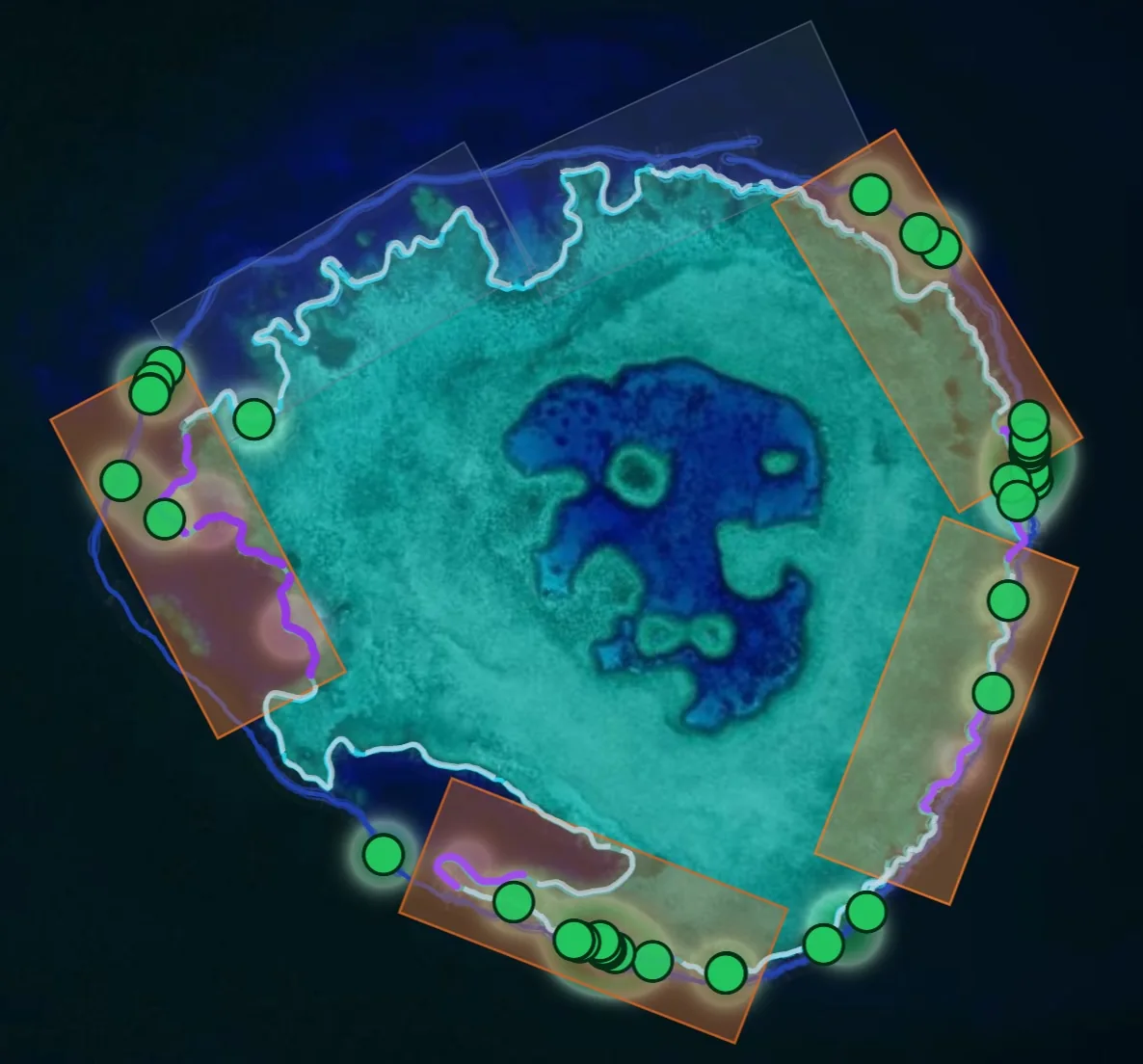
Detailed reef-scale alignment between image detections and cull evidence
Closer reef-scale image and cull comparison
Image detections, blue image surveys, purple and gray manta tow tracks, and brown and gray cull-site areas aligned on the same reef
Blue: image survey · Purple/gray: manta tow · Brown/gray: cull sites

Read with care: blank areas are often gaps in effort or timing—not evidence that methods disagree. Robust calibration requires surveys matched in both space and time.

The current constraint

The platform can scale. The evidence footprint must catch up.

The June 2026 snapshot covers approximately 30 months of data from January 2024. Image surveys covered about one-tenth the measured distance of the established manta tow record. The smaller image-derived evidence base is an expected consequence of lower deployment effort—not a test of method quality.

Measured survey distance 9.04× gap
Manta tow8,184 km
Image survey905 km

8,184 km ÷ 905 km = 9.04

June 2026 snapshot covering data from January 2024. Counts and effort use method-specific units and should not be interpreted as directly equivalent measures.
Method COTS evidence Survey / records Effort What it contributes
Cull ~125,000 ~28,000 1,444 days Direct control evidence and a large operational record
Manta tow ~3,000 ~41,000 8,184 km Long-running, broadscale visual surveillance
Image 251 618 905 km Persistent, reviewable, high-detail evidence
What comes next

Scale image collection by roughly an order of magnitude—and deliberately match surveys in space and time—to move from promising detections toward calibrated density and confidence.

Built through collaboration

Every partner closes a different gap.

Field operations, management, monitoring platforms, science, funding, AI and cloud infrastructure must work as one delivery system.

01

GBRF

Funding, COTS Control Innovation leadership and coordination.

02

GBRMPA + QPWS

Management context, RJFMP field operations and workflow collaboration.

03

AIMS

ReefScan platforms, image generation, provenance and deployment of edge AI.

04

Google

TensorFlow/Kaggle origins, large-scale data collection support, and cloud, Vertex AI and Gemini technology.

05

CSIRO

AI research, integration, validation, analytics and data products.

Information for Sea Country

Better reef evidence can support understanding of Sea Country health and condition.

COTSpotter data can help Traditional Custodians see where and when COTS surveys have occurred and what was observed. Initial engagement is planned for the coming months, with the project fact sheet providing a practical starting point for those conversations.

Download the project fact sheet

The workflow is built

Now scale the evidence.

Help expand matched image collection, calibration and operational adoption for the people protecting the Reef.

Contact coming soon Log in to COTSpotter